The most dangerous wallet mistake is often made before a transaction is signed: assuming that a familiar-looking screen means a familiar level of risk. A wallet may show a token balance, a protocol name, and a large confirmation button while hiding the actual permissions, contract calls, and asset movements underneath. In DeFi, the interface is not merely a window into the blockchain. It is part of the security model.
This is why the modern web3 wallet has evolved beyond simple key storage. For US users moving between Ethereum-compatible networks, decentralized exchanges, lending markets, bridges, and NFT platforms, a useful wallet must help answer a harder question than “Do I have enough gas?” It must help answer: “What will this transaction cause my account to be able to do afterward?” That distinction places transaction simulation, approval visibility, and chain-aware warnings at the center of the multi-chain wallet experience.
From address book to transaction interpreter
Early crypto wallets were principally signing tools. They held or connected to private keys, displayed balances, and broadcast transactions. That model made sense when users mostly sent native coins from one address to another. DeFi changed the workload. A single click on a lending or trading application can produce a transaction that calls a smart contract, transfers several assets, changes token permissions, or interacts with a contract whose behavior is difficult to inspect directly.
A multi-chain wallet adds another layer of complexity. “Multi-chain” does not simply mean that several networks appear in one menu. Each network has its own transaction history, gas asset, block conditions, contract ecosystem, and failure modes. A user who switches from Ethereum to an optimistic rollup or another Ethereum-compatible chain may encounter similar-looking addresses and application screens, but the surrounding assumptions are not identical. The wallet must therefore interpret context, not just display data.
This is the conceptual shift many users miss: a wallet is becoming an execution interpreter. It translates a technical request into a more legible account-level outcome. If an application asks for an unlimited token approval, the important fact is not only the contract address. The important fact is that the contract may later be able to move that token from the user’s address, subject to the token’s approval rules. The approval transaction may succeed even when the later application interaction fails. That is a security and usability issue, not merely a technical detail.
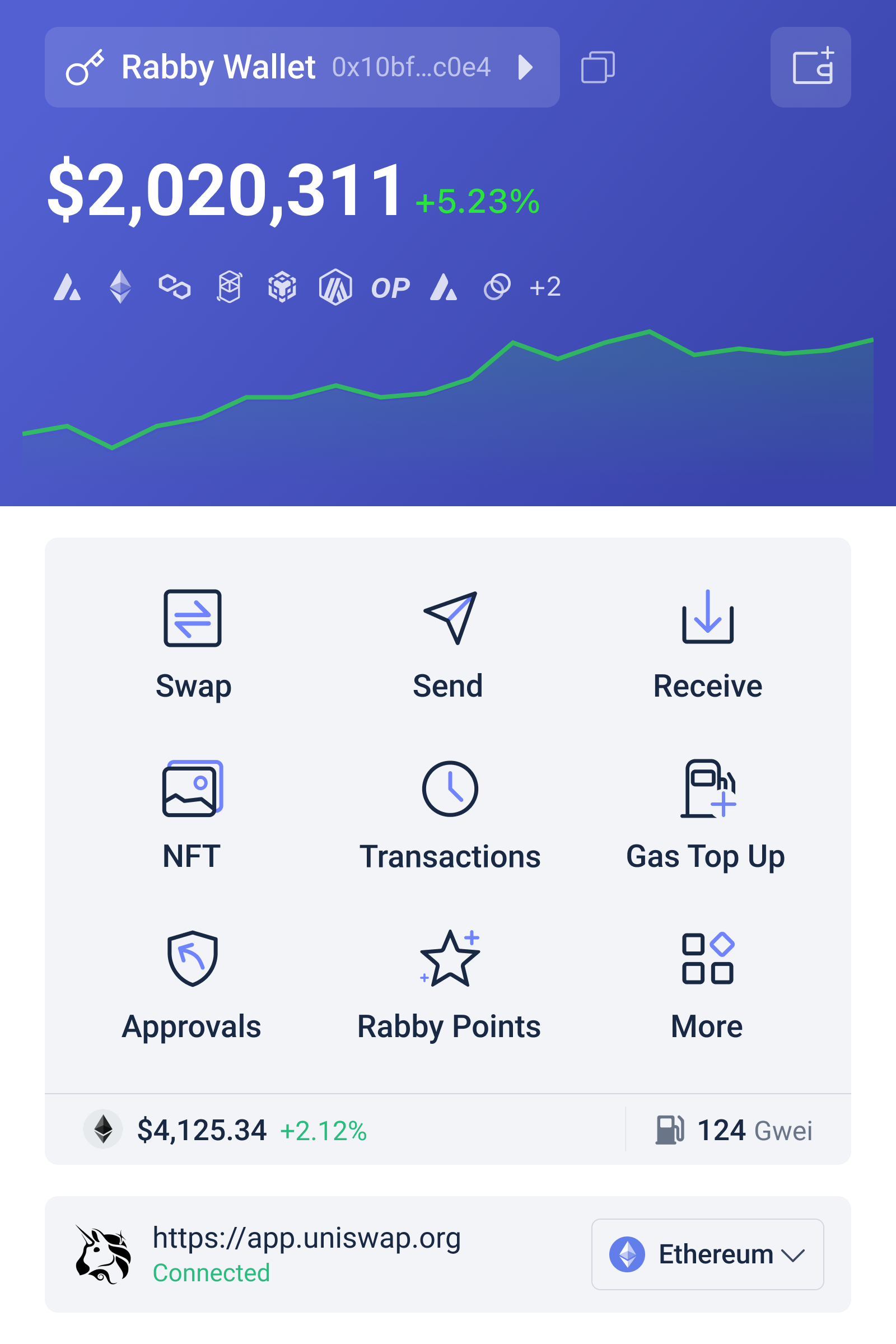
For users who want a wallet that emphasizes this review layer, rabby wallet can be evaluated as part of a broader workflow rather than as a replacement for judgment. Its value proposition is most relevant when the wallet surfaces transaction simulations, contract information, asset changes, and possible warnings before signing. Those features can reduce the gap between what a DeFi interface promises and what the blockchain transaction actually requests.
What transaction simulation can—and cannot—tell you
Transaction simulation is best understood as a preview of execution under a particular set of conditions. The wallet or an associated service attempts to model what would happen if the transaction were processed: which assets might leave the account, which assets might arrive, whether a call is likely to revert, and whether permissions or balances change. This is more informative than a raw hexadecimal data field, especially for users who do not routinely decode contract calls.
Consider a common scenario. A trader connects a wallet to a decentralized exchange and intends to swap a stablecoin for another asset. The visible application may show the expected output, but the underlying transaction can include a token approval followed by a swap. A useful preview may distinguish those steps and show the expected balance changes. If the output is an unexpected token, the amount is implausibly large, or the call would interact with an unfamiliar contract, the user has a chance to stop before signing.
That “chance” matters, but simulation is not proof of safety. A simulation can depend on the current blockchain state, the selected network, the data source used for interpretation, and the assumptions of the simulation environment. Market prices can move. Liquidity can change. A contract may behave differently depending on block timing, sender address, oracle data, or another transaction being executed first. Some malicious behavior may be conditional or designed to evade straightforward previews.
The practical rule is simple: treat simulation as a smoke detector, not a fireproof building. A clear preview lowers uncertainty; it does not eliminate it. Users should still verify the domain they opened, the network they selected, the token contract when authenticity matters, and the economic logic of the transaction. A warning should trigger investigation, while the absence of a warning should not be interpreted as an endorsement.
The security problem is often permission, not transfer
Many wallet users focus on visible transfers: “How much money am I sending?” In smart-contract systems, a more revealing question is often: “What authority am I granting?” Token approvals can allow a contract to spend a specified amount of an asset on the user’s behalf. That authority may be useful for trading or lending, but it creates an ongoing relationship between the account and the approved contract.
This creates a less obvious risk asymmetry. A direct transfer is usually a single movement. An approval can be a standing permission whose consequences appear later. If the approved contract is compromised, incorrectly designed, or used through a deceptive application, the approval may increase the potential loss. Revoke tools and approval management are therefore not cosmetic additions. They help users maintain the principle of least privilege: grant only the authority needed, for only as long as it is needed, when the application supports that approach.
There is a trade-off. More restrictive approvals can improve control but add friction, additional transactions, and additional gas costs. On Ethereum mainnet, that cost may be material; on lower-cost networks, the friction may be smaller, though it is never literally zero. A user who revokes every approval reflexively may spend time and fees without materially improving safety if the underlying application or account-compromise problem remains unresolved. Security decisions should match the exposure, not follow a ritual.
A reusable framework for reviewing a DeFi transaction
A strong wallet workflow separates four questions that are often compressed into one confirmation click. First, identity: am I on the legitimate application domain, and is the contract address consistent with what I intended to use? Second, authority: am I transferring assets, granting an approval, signing a message, or authorizing a more complex operation? Third, outcome: what should my balances and permissions look like after execution? Fourth, reversibility: if something goes wrong, can the action be undone, or is the loss effectively permanent?
This framework is especially useful when moving across chains. A familiar protocol name does not guarantee identical deployments or behavior on every network. Bridging introduces another boundary: the user is not simply changing a wallet setting but relying on a system that locks, burns, mints, or otherwise coordinates assets across distinct networks. Delays, message failures, liquidity constraints, and mismatched token representations can all matter. A multi-chain wallet can make the process easier to navigate, but convenience should not be confused with shared security.
For advanced DeFi users, the right question is not whether a wallet “supports” a network. Support can mean several things: displaying balances, connecting to decentralized applications, simulating calls, estimating gas, or helping manage approvals. These capabilities are not equivalent. When comparing wallets, examine the depth of transaction interpretation and the quality of the warnings, not only the number of chain logos in a compatibility list.
What to watch as wallets become more intelligent
The likely direction of wallet design is toward more contextual assistance: clearer balance-change previews, better distinction between permits and approvals, stronger detection of suspicious contracts, and more consistent handling of activity across networks. If those tools improve, the wallet may become a practical control layer between users and increasingly complex applications. That would be valuable because smart contracts are becoming more capable faster than most users can become proficient in reading their raw call data.
Yet this evolution creates a new dependency. The more users rely on automated risk labels and simulations, the more important it becomes to understand how those judgments are produced, how quickly they update, and what they fail to cover. A false warning can create unnecessary friction; a missed warning can create misplaced confidence. The best future wallet will not hide complexity entirely. It will expose the parts that affect the decision while keeping the underlying mechanics available for inspection.
For now, the durable lesson is modest but powerful: a wallet should help users verify intent at the point of signing. Transaction simulation, multi-chain context, and approval visibility are not substitutes for careful behavior, but they improve the quality of the information available before an irreversible action. In DeFi, that extra information can be more valuable than another shortcut.
Frequently asked questions
What makes a multi-chain wallet different from a basic crypto wallet?
A multi-chain wallet is designed to manage assets and application interactions across multiple blockchain networks from a common interface. The meaningful difference is not only convenience. A capable wallet must also keep network context, gas requirements, contract interactions, approvals, and transaction history from becoming confused when the user moves between chains.
Does transaction simulation guarantee that a DeFi transaction is safe?
No. Simulation provides a conditional preview of likely execution and can reveal unexpected asset movements, failed calls, or suspicious permissions. It may not capture every state-dependent behavior, market change, oracle condition, or malicious design. Users should combine the preview with domain verification, contract awareness, and a clear understanding of the intended outcome.
Why should I review token approvals?
An approval can grant a smart contract permission to spend a token from your address. Unlike a one-time transfer, that permission may remain active until it is changed or revoked. Reviewing the amount, the contract, and the reason for the approval helps limit unnecessary exposure, although managing approvals can involve extra transactions and network fees.